
Frostpunk 2 Food Guide: Districts, Hothouses & Stockpiles
Frostpunk 2 food guide: build Food Districts, pick the right Hothouse, pass food laws, and stockpile enough to keep your city fed through the Whiteout.
Jump to
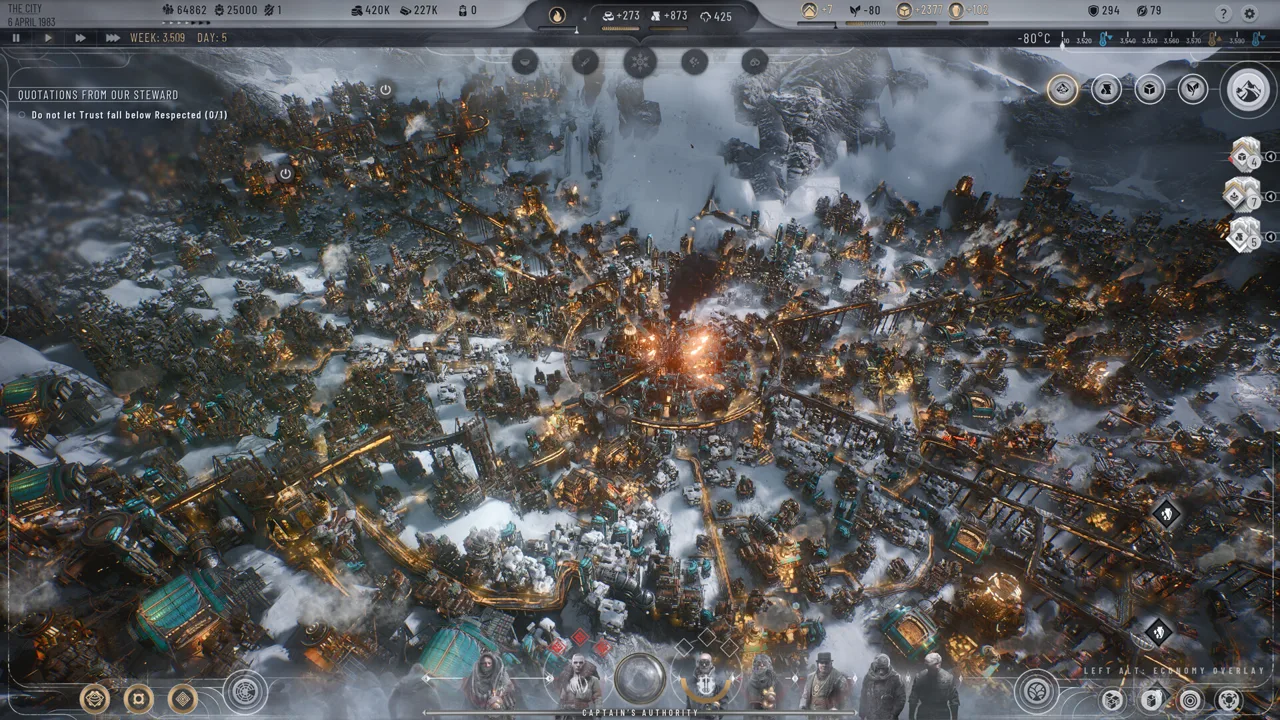
Why Food Runs Out Faster Than You Think
Besides freezing, starvation is one of the most common problems your city will face. Frostpunk 2 food demand scales with your population, so every wave of refugees or Frostlanders you take in raises the bill. One or two Food Districts will carry you through the opening hours, but they won't feed a large city.
Keep an eye on the Hunger meter at the top of the screen. It moves from absent to present to starvation. Hover the food icon to see your current stockpile and capacity.
You don't need a perfect surplus at every moment. Food scarcity causes hunger, which can lead to starvation and death. Even so, a negative number means the stockpile is draining, so treat it as a countdown.
Building and Running a Food District
Food Districts grow food on Fertile Soil. Before you can build one, you have to reach the soil.
 Image: Steam / 11 bit studios
- Find the soil. Hold left Alt to open the resource overlay. Tiles with food icons are your Fertile Soil.
- Frostbreak a path. Use the frostbreaking tool to carve a route from your city to the soil. Keep extending the path to unlock more soil.
- Place the district. Open Construct Districts, choose Food District, and cover as many Fertile Soil tiles as you can.
A standard Food District covers six tiles. It costs 600 Workforce, 40 heat and 25 materials to run, and it produces 50 food. You can expand it by three tiles. That raises output to 60 food and adds a second building slot, with no extra Workforce or heat cost.
Click a finished district to see:
- how much food is left in the deposit
- how many weeks the deposit will last at the current rate
- any area effects from nearby districts
Use the efficiency slider to scale the district down. A lower setting cuts heat and material demand along with output, and setting it to zero shuts the district off. Once the deposit is empty, dismantle the district to get most of your construction resources back.
Placement: Heat and Neighbors
Where you put a district affects how much it costs to run.
 Image: Steam / 11 bit studios
Adjacency. Districts placed next to each other share heat, and Food Districts get a heat bonus from neighbors. Build your Food Districts side by side to take advantage of their heat bonus.
Hubs. Food Stockpile Hubs reduce the Workforce needed in neighboring Food Districts, so leave a free tile between your farms where a hub can touch more than one district.
Hothouses and Other Food Buildings
Before you build another district, upgrade the ones you have. Research Hothouses in the Resources tab of the Idea Tree (press R). Hothouses go in a Food District's building slots.
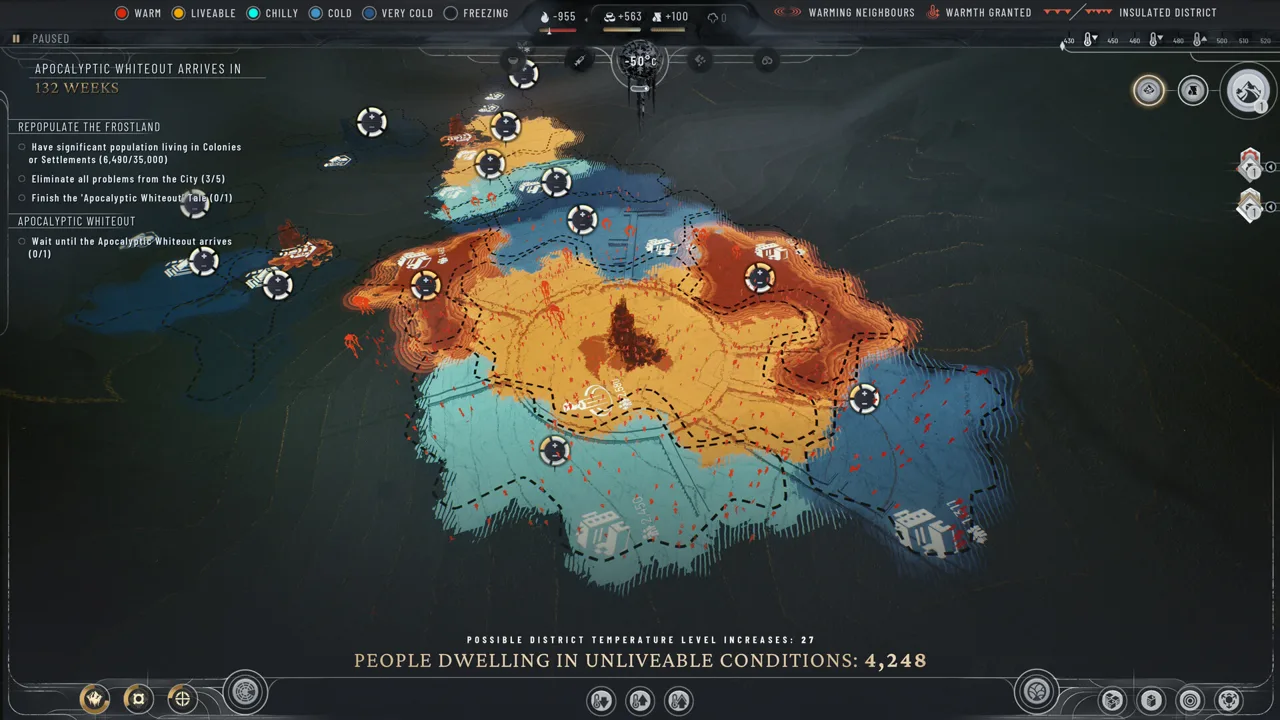 Image: Steam / 11 bit studios
| Building | Path | Workforce | Food | Heat |
|---|---|---|---|---|
| Drum Hothouse | Basic | 400 | 60 | 40 |
| Chemical Hothouse | Progress | 300 | 50 | 40 |
| Bio-waste Hothouse | Adaptation | 400 | 70 | 20 |
| Advanced (basic) | Needs Steam Cores | 400 | 120 | 40 |
| Advanced (Progress) | Needs Steam Cores | 300 | 80 | 40 |
| Advanced (Bio-waste) | Needs Steam Cores | 400 | 100 | 20 |
Trade-offs. The Chemical Hothouse saves Workforce. Among the basic Hothouses, the Bio-waste Hothouse gives the most food for the least heat.
Depletion. Hothouses draw from the same deposit as the district. They make that deposit run out sooner, so check the weeks-remaining counter after you build one.
Excessive Fertilization. Every Hothouse unlocks this district ability. It adds roughly 50% to food output and also raises disease. Use it when you need a burst of food, not as a permanent setting.
Panaceum Factory. This is a radical idea in the Society tab for cities aligned with Reason. You unlock it by researching hospitals, then treatment, then pharmaceuticals. It goes in an industrial district rather than a food district. It costs 200 Workforce and 20 heat, produces 50 food, and reduces disease.
For a late-game food block that never depletes:
- Line up four industrial districts.
- Add heating and maintenance hubs between them until the districts need no heat or materials.
- Put two Panaceum Factories in each district.
That gives about 400 food from the block.
Deep Fertile Soil
Look for Fertile Soil marked with an infinity icon. That's Deep Fertile Soil, and it holds an almost unlimited supply of food. To use it, research and build the Deep Melting Drill, which is tied to generator upgrades. You won't need it early, but it's a great way to get more food in the late game, when normal deposits may run out.
Laws, Abilities and Emergency Measures
Food laws. The Council offers two food laws from the start:
- Chemical Additives (Progress): +25% production in Food Districts, but disease rises slightly. It doesn't boost Panaceum Factories.
- Foraged Additives (Adaptation): roughly 1 extra food per 500 population.
Emergency Shift. Turn this on in a Food District for extra food. It costs you relations and trust, and it can cost lives. Use it as a last resort.
Tighten belts. In the prologue, you can order Tighten Belts to cut how much people eat.
Restrict food rations. In Breach of Trust, this city ability can turn a crisis around. The hunger it causes is often enough to starve a few people. Use the Founders' community ability or build Food Hoarding Inspectorates in your housing districts to help prevent starvation deaths.
Icebloods. If the Icebloods are in your city, their Lead Volunteer Explorations action gives a permanent +80 food. It has a 150-week cooldown. The bonus stacks each time you use it and stays even if relations with the Icebloods turn sour.
Food From the Frostland
Build a Logistics District at the edge of the map to send scouts into the Frostland. Before you pick a destination, click the area and check whether food is listed among its possible findings.
What you can find out there:
- Fishing and seal spots. Sources of food your Frostland teams can bring back.
- Food caches. Abandoned stores of food you can bring home.
- Herds. A common herd yields 70 food and ties up five Frostland teams while you harvest it.
Connect an outpost to your city with a trail or Skyway and its food is added to your city's supply.
The Breach of Trust launch brought a free content update and patch notes that touched food:
- Fishing Hub: added in the free update, available only on Aurora.
- Whaletown: output cut. Whaletown + fell from 250 to 200 food, and Whaletown ++ fell from 400 to 300.
Hotfix 1.6.1 followed with more food changes:
- Frostland dilemmas: food stockpiles increased.
- Altering the Deal: accepting it now grants an extra 50k food.
The developer's July 10, 2026 tips post for New Edinburgh gives two more pointers:
- Early food shortage. Lean on each community's Community Actions and explore early. Your starting Warm Logistics District provides 20 Frostland teams, enough to reach medium-difficulty areas.
- Aurora's food outpost. Seize it. It's the only dedicated food outpost available, and taking it also weakens Aurora.
Stockpiling for the Whiteout
A Whiteout greatly increases your energy needs, and your stockpile has to carry the city until it passes. A surplus that looks comfortable can disappear once the storm hits.
Expand storage early. Build Food Stockpile Hubs. Each one adds capacity and reduces the Workforce needed in neighboring Food Districts.
Place hubs well. In the prologue, a Food Stockpile Hub cuts the Workforce requirement of neighboring Food Districts by 15%, so place it touching two or more Food Districts to get the most out of it.
Set a target. Your city center holds 50,000 food. By the first Whiteout you'll probably need at least 150,000, and that can leave almost nothing to spare. Aim for 200,000 if migrants have pushed your population up.
Go in stable. Enter the storm with high trust and low tension. If you run short near the end, you'll lose some people and some trust, but a stable city can recover once the skies clear.
FAQ
Do Hothouses create extra food?
They raise a Food District's output, but they draw from the same deposit, so it depletes faster. For food that doesn't drain a local deposit, look at options like Deep Fertile Soil with a Deep Melting Drill, Panaceum Factories, connected Frostland sources, and the Foraged Additives law.
Why are my people starving when I have food stockpiled?
In Breach of Trust, the Restrict Food Rations ability causes hunger even when your stores are full. Use the Founders' community ability or build Food Hoarding Inspectorates in your housing districts to help prevent starvation deaths. These measures can prevent those deaths most of the time.
Ready to feed your own city? Pick up Frostpunk 2 on Steam.
Continue with
 Frostpunk 2 Buildings Guide: Districts, Hubs and UpgradesOur Frostpunk 2 buildings guide covers every district, key buildings, hubs and adjacency bonuses so you can heat, feed and supply your city efficiently.
Continue exploring

Frostpunk 2 DLC Guide: Every Expansion and Release Date
Frostpunk 2 DLC explained: Fractured Utopias, Breach of Trust, and The Surge—release dates, features, tips, and which bundle gets you all three expansions.

Frostpunk 2 The Surge: Release Date, Features & Prep Tips
Frostpunk 2 The Surge launches December 14 on PC, PS5 and Xbox. Discover the Tesla-inspired resource, storm tech, the US valley setting and how to prepare.
Join the community
Official channels for news, updates and player help: